

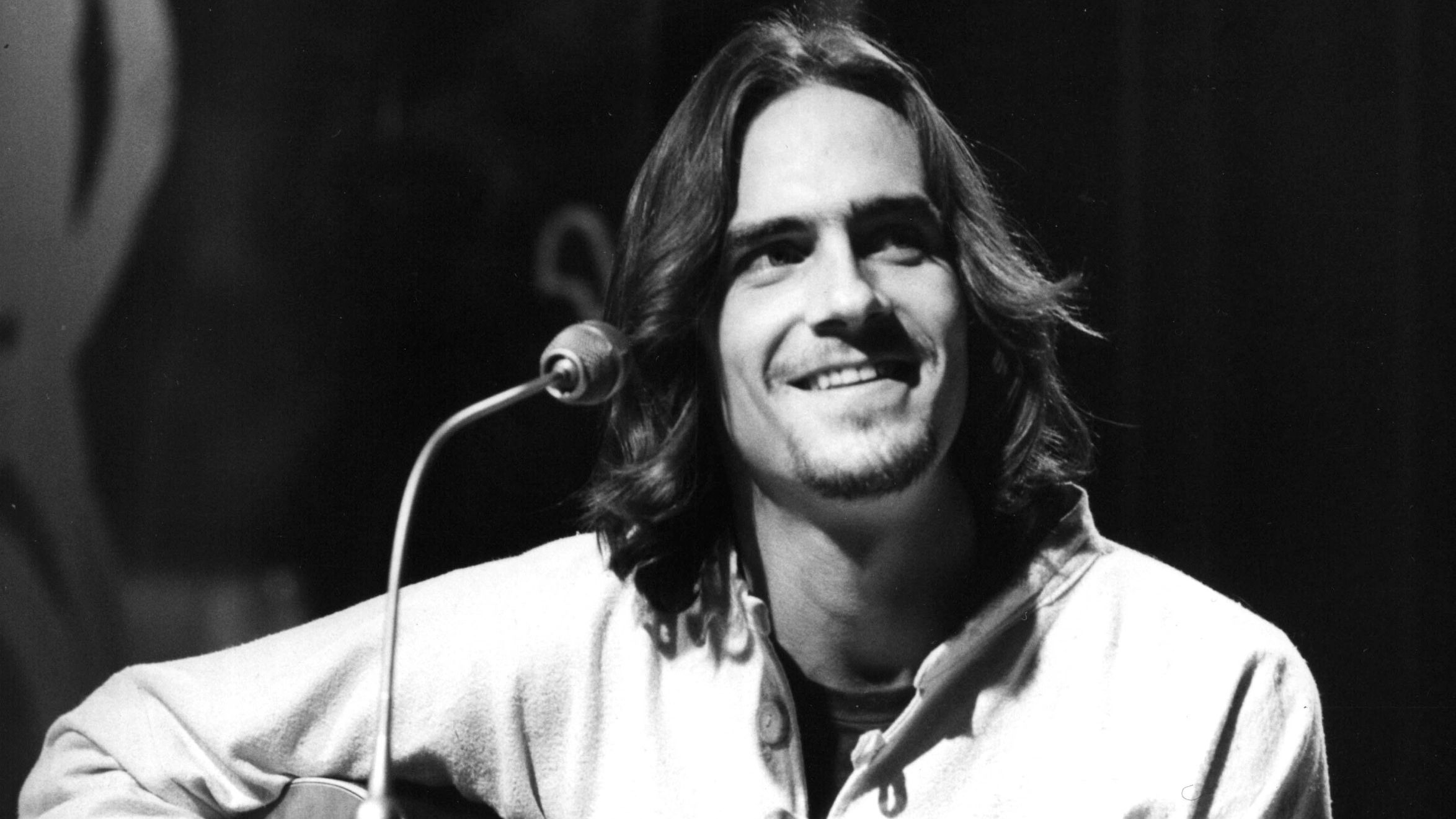
You wouldn’t think George Jones and James Taylor would have much in common, much less share anything noteworthy within the world of popular recordings. But their musical Venn diagram did overlap significantly in one place and time.
Let me tell you a little about it.
If you grew up a fan of authentic Country music, the legendary George Jones needs no introduction. His distinctive voice and, especially, his elongated phrasing,¹ made him known as “The Rolls Royce of Country music.” (His beady eyes and pointy nose also earned him the nickname “The Possum” but that’s another story).
James Taylor, of course, is on a very short list of the preeminent singer/songwriters in Pop/Rock history, and his effortless, understated vocals are more soothing than hot tea with honey under a warm blanket.
In 1977 Taylor released his 8th studio album, JT, which would peak at #4 on the Billboard albums chart (his highest since 1971’s Mud Slide Slim). It contained the hit singles ‘Handy Man,’ ‘Your Smiling Face’ and ‘Honey Don’t Leave L.A.,’ as well as one of the most beautiful songs ever recorded, ‘Secret O’ Life’ (it is, per James, simply “enjoying the passage of time”). But JT also included something else, a definite curveball for Taylor: an unadulterated Country song named ‘Bartender’s Blues.’ It was described as the New England born Taylor’s impression of what life in a honky tonk must be like, while flipping the common Country music theme of a customer crying in his beer while spilling his troubles to a bartender. The production was Nashville lush, featuring prominent steel guitar, and, critically, to augment the stirring harmony of the chorus, Taylor chose the best female voice Country Rock has ever produced, his friend Linda Ronstadt.
Even from deep down on Music Row, George Jones didn’t miss hearing the song. A label executive played him Taylor’s tune and Jones liked it immediately, remarking, “That boy is trying to sound like me!” Mere months after Taylor’s release, Jones recorded his own cover of the song, releasing it first as a single in 1977, where it peaked at #6 on the Billboard Country chart (his first Top 10 single in over two years), and ultimately as the title track of his 1978 album Bartender’s Blues, a performance found to be so riveting one reviewer hailed Jones as “The spirit of Country music, plain and simple, its true Holy Ghost.”
But before it could be completed and issued, Jones had to first decide on that critical harmony accompaniment – the place where Taylor had slotted in Ronstadt for his. According to George Jones’s 1995 memoir I Lived to Tell It All, Jones went ahead and recorded all of his part of the track and then sent it out to his designee, someone with whom he’d had no previous contact, who dutifully returned it shortly thereafter complete with his perfectly overdubbed harmony part. That resplendent singer, already quite familiar with the song, was none other than James Taylor.
Why not pull up a barstool and have a listen to one, or preferably both: Taylor (with Ronstadt) and Jones (with Taylor). Either gloriously melancholy version might help you find your honky tonk angel to hold you tight, and keep you from slipping away.
¹Jones was once quoted as saying, “Yeah, I got that part from (early country vocal stylist) Lefty Frizzell. He always made five syllables out of one damn word.”


Rob MacMahon
October 16, 2025 1:59 pmYo BG: I hv listened to that Geo Jones version hundreds of time as I hv that 16 Biggest Hits CD and am a huge Possum fan. I can thank Zing the Elder for that influence as he and I caught GJ at the Keswick back in 03 and then I caught GJ again at the York County Fair in 04 (and got backstage to meet him and shake his hand; long story but I was defending the Fair in a assault case). Still, I had no idea it was a cover of James Taylor having never heard James’ original. Ya learn something new every day. Keep up the good work. Music is Life, my friend! RMac
PS: I agree; I love Linda’s voice too.
So Much Great Music
October 16, 2025 2:05 pmI knew both versions, but had always assumed it was James Taylor doing the cover – what with George Jones being the Country legend and all – until doing a little recent research..