
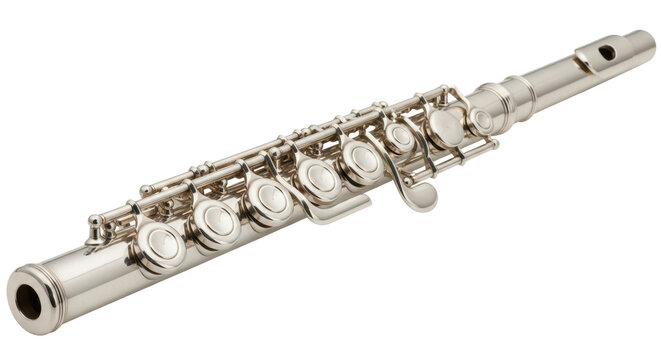
In 1967 Ian Anderson was holding down a day job cleaning toilets at the Ritz Cinema in Bedfordshire, England, playing electric guitar in a soul/blues band and dreaming of being a rock star, when he had a fateful realization: he would never be as good as Eric Clapton. Anderson, then 20, quickly developed a new tack: at a London music store he traded in his Fender Stratocaster for a flute.
He had never played the instrument before, and would never take a lesson.
Anderson struggled to produce a sound for months until someone explained the need to blow across the embouchure hole rather than into it. Once he figured out five notes, he had the blues scale, and began adapting his guitar-playing mindset to the flute. Playing an aggressive, overblown style for a Prog-rock powerhouse known as Jethro Tull – even developing a signature multi-tonal “growl,” Anderson would soon become the most famous flautist in rock and roll history.
Okay, but are there even others?, you might be saying. Well, as sure as you can picture a crazy-eyed Ian Anderson playing ‘Locomotive Breath’ while balanced on one leg like a deranged flamingo, the answer is, yes, surprisingly more than you’d think.
Not to mention San Diego’s favorite anchorman and flutemaster, Ron Burgundy.
While Tull’s Anderson was the rare flautist frontman – would we say, flouting convention? – three other bands must come to mind next that also regularly featured some major woodwind chops on the flute: Traffic (Chris Wood), War (Charles Miller), and, of course, Marshall Tucker Band (Jerry Eubanks, easily the second-most prodigious flute player ever), all of whose parts were integral to their band’s established sound and prominent in many of their most famous songs.
(in a more contemporary setting, there’s also Lizzo, but I’m not ready to include her in rock and roll circles)
Then there are the numerous well-known tunes you may not have registered as also having the flute front and center, including those by notable bands such as The Mama’s & The Papa’s, Chicago, Canned Heat, Bob Seger and even The Beatles. A full, new SMGM Playlist “The Best of Flute” follows below (one prime selection each for frequenters Tull, Traffic, War and Tucker).
Of all of these, though, I do have a favorite. Care to guess who? That’s right, The Guess Who.
On their ethereal 1969 classic ‘Undun’ (yes, that is the correct spelling), lead singer Burton Cummings offers a flute part that’s particularly memorable for multiple reasons. Firstly, Cummings’ lively solo proves the perfect counterpoint to the regretful tone of the song’s poignant lyrics¹ as well as to the ultra-jazzy chord changes neatly slotted by guitarist Randy Bachman (who later took care of business in Bachman-Turner Overdrive). More noteworthy, however, is how this flute passage came to be at all. On the day of a gig, native Canadians Cummings and Bachman were together at a music store in Winnipeg, Manitoba. They passed a flute section and Bachman, on a whim, suggested Cummings get one. Cummings considered it, but said that he didn’t know the fingering. The store owner intervened to mention that it’s basically the same as the saxophone, which Cummings had played for a couple years in a prior band. So, he went ahead and bought a flute, using it, for the very first time ever, on stage that night. Days later, Cummings decided to try it for the solo break when recording ‘Undun,’ hence entering flute-rock lore.
It’s 9 bars, 16 seconds, and I’d consider it one of the most magical flute-playing passages ever performed. Alongside Ron Burgundy, naturally.
¹”Too many mountains, not enough stairs to climb / Too many churches, not enough truth / Too many people, not enough eyes to see / Too many lives to lead, not enough time” Whoa.




Leave a Comment