
It wasn’t exactly Ray Liotta leading Lorraine Bracco through the kitchen of the Copacabana in Goodfellas, but still, we did utilize the unmarked back entrance – a red door plastered with sundry stickers – to access the club, in this case the famed Village Vanguard in NYC’s Greenwich Village neighborhood. My son Max and I got the VIP treatment for the sold-out late set thanks to his girlfriend, who works at the club and was also kind enough to arrange for a reserved table close enough to the stage to play the vibes myself (stay tuned for what those are). In fact, when two members of the band would finish their respective solos throughout the show, they would step to stage left and sit down on a bench right next to us. Literally. Just one guy was in between – we chatted him up very briefly before the show – who turned out to be the bass tech. How did he get such a primo gig, Max asked excitedly. “Gotta be in the scene,” came his deadpan reply. Had he met Mr. McBride, one of the jazz world’s top bassists as well as personalities, somewhere else or at some other show? “Just gotta be in the scene,” he repeated, more or less cutting off further inquiry.
For this night, we were indisputably in the scene (was it “in the scene” or “on the scene”? I can’t recall for sure, but either way we were there). And we were seeing a legitimate titan of modern jazz at one of the most historic jazz venues there is, the oldest operating music club in New York City.
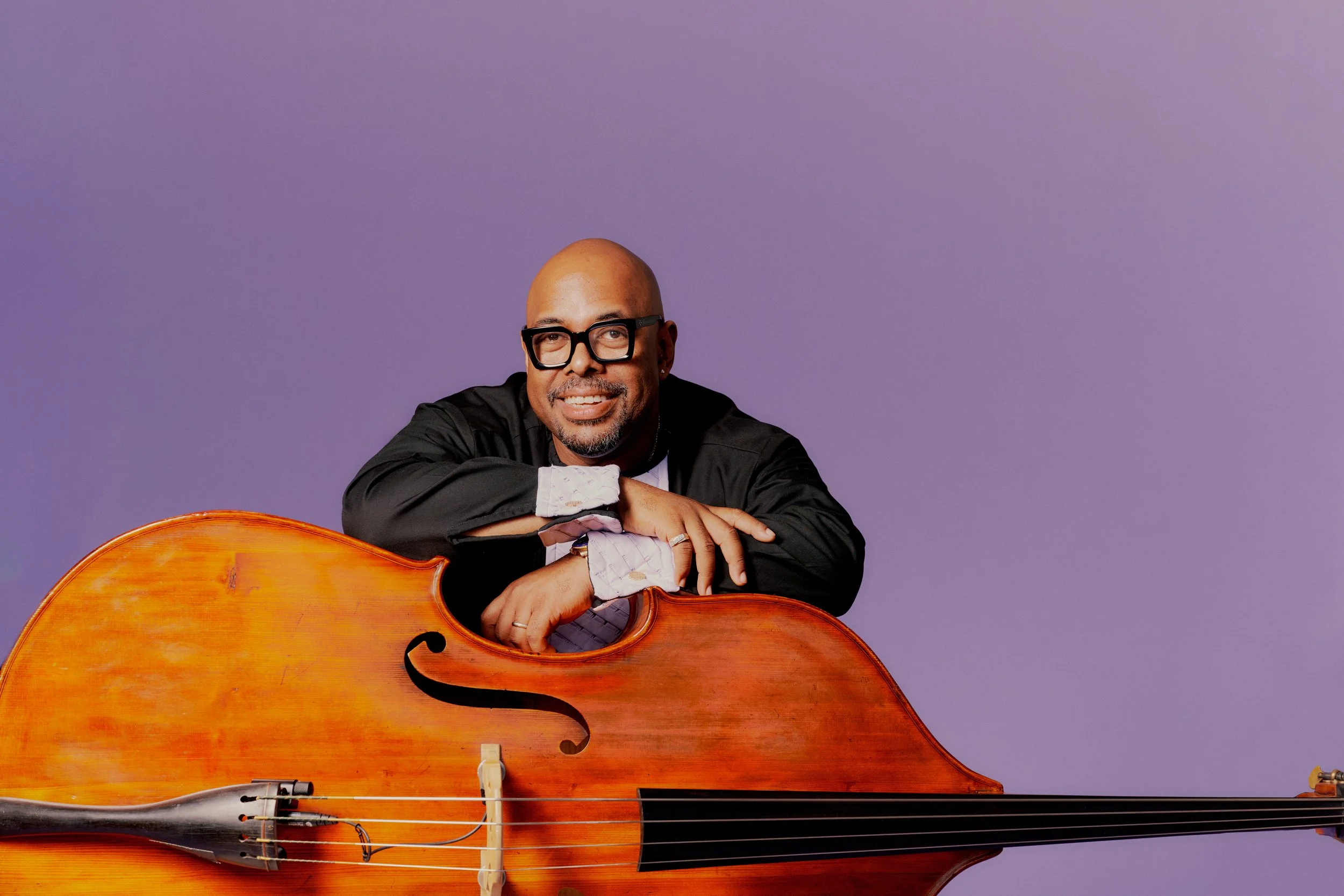
Let’s start with “The Vanguard,” as it’s most commonly known, in business since 1935 and just one of those places. Everyone has played there, and their pictures line every wall. Whether or not you’re a jazz expert, as I surely am not, I bet you’ve heard of them: Miles Davis, John Coltrane, Sonny Rollins, Cannonball Adderly, Charles Mingus, Thelonius Monk and Dizzy Gillespie, to name but a sampling of the most bold-faced names in jazz history. The charming, underground space fits fewer than 130 patrons, so it is intimate, and indeed intense, when you’re privileged to be practically on top of practitioners at this elite level. Which brings us to the band, a breathtaking quintet fronted by Christian McBride and joined by his group Inside Straight (Peter Martin on piano, Carl Allen on drums, Steve Wilson on saxophone, and Warren Wolf, our arms-reach neighbor on vibraphone, aka “vibes”).
That vibe playing was truly a remarkable thing to see live, let alone from that close. If you think you’re not familiar with the instrument, you are: it’s that long table-like thing you stand in front of, lined with rectangular metal bars, and struck with what look like two sticks with big cotton balls at one end, called mallets (Lionel Hampton is likely its most famous player, along with Milt “Bags” Jackson – great name). What I didn’t know, but learned from our unique vantage point, is that there’s also a set of motorized fans set beneath the bars to create the vibrato sound (thereby, the “vibe”). And Mr. Wolf, at whom I confess I did occasionally howl, was simply astounding to watch. With imposing guns bulging out of a nondescript polo shirt, he adroitly whaled away with those innocent looking mallets. There are no vibraphone chords, with just two sticks landing, nor are rolls possible, as with hard tips on a rebounding snare drum, yet his speed and arm-crossing dexterity was both melodic and wildly mesmerizing.
As for the bandleader and headliner, Christian McBride, he’s a powerhouse combining technical and soulful mastery, and is simply a modern superstar. If one is even slightly familiar with the contemporary jazz world (that “scene” his assistant must have been referring to), recognizing him would be akin to a soccer fan knowing Kylian Mbappé (not being a soccer fan myself, I had to look him up for what seemed like an appropriate comparison). The nine-time Grammy winner, prolific composer-arranger-producer, and Downbeat Magazine’s 2025 Artist of the Year has performed and recorded with a who’s-who of latter-day jazz celebs – Freddie Hubbard, McCoy Tyner, Herbie Hancock, Pat Matheny, Chick Corea, Wynton Marsalis and innumerable others, as well as countless popular artists from Paul McCartney to James Brown. His enthusiastic, nimble-fingered playing was utterly fluid yet always totally tight, completely in-sync with his band through jarring, potentially vertigo-inducing changes. Moreover, because we got the red-carpet treatment on the way in, we also did following the show; having a drink with staff at the bar while the gregarious McBride came to hang out for a celebratory glass of champagne.
The show was one of two each night during a two-week-long annual December Vanguard residency. At a previous run in 2021, McBride & Inside Straight actually recorded and subsequently released an album, Live at The Village Vanguard, the last track of which was also the closing song performed at our show, ‘Stick and Move.’ That title, surely a nod to the core boxing technique of landing a punch then immediately repositioning oneself, seems apt to the breakneck instrumental jumps included at its beginning and end (sandwiching an extended bass and drum exchange). Like much of the show’s repertoire, it was at times stupefying, but importantly for this relative jazz novice, entirely trackable – chord progressions and tempo variations that were always “understandable,” if you will, unlike the avant-garde rejection of structure, say, in free jazz. In all, it made for a reasonably thrilling evening: some incredible music outside my normal comfort zone, experienced within a historic setting I’d never visited before, and shared with my ever horizon-expanding musician son. All that, and let’s not forget, the secret Goodfellas back door.
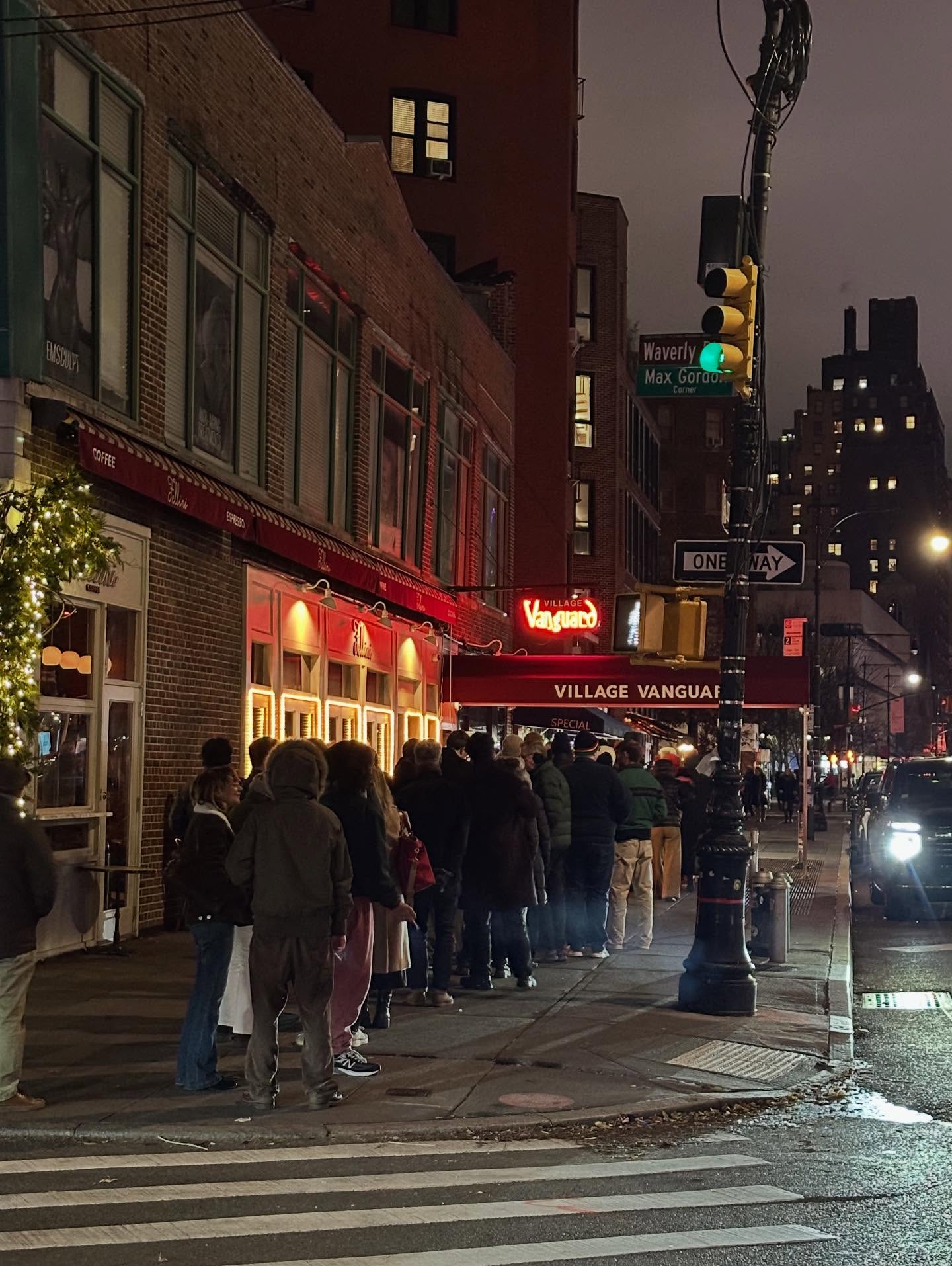
We did not wait in this line (nor use this entrance)


Leave a Comment